What Sunrise 2027 actually says
Sunrise 2027 is a GS1 programme with a simple goal: by the end of 2027, retail point-of-sale systems should be able to scan 2D barcodes, the QR codes and GS1 DataMatrix symbols that carry more than a product number. It grew out of GS1 US work with retailers and brand owners, and GS1 describes it as an ambition for the industry, the moment when registers everywhere can read the next generation of barcodes.
Three things it does not say. It does not order anyone to remove the linear barcode. It does not set a legal deadline, because GS1 is a standards body, not a regulator. And it does not require every product to carry a 2D code on a given date. What it does is give retailers a target for their scanner fleets, and give brands a reason to make their next packaging refresh the one that adds a 2D code.
July 2024
EU ecodesign regulation in force
The Digital Product Passport has a legal base. Product groups follow through delegated acts.
2025
DSCSA enforcement phases
US prescription drug packages carry a 2D product identifier with serial, lot and expiry.
February 2027
EU battery passport
First product group that must carry a passport data carrier on the product.
End of 2027
Sunrise 2027 target
Retail point of sale able to read 2D barcodes, GS1's ambition for the industry.
Why the register is the hard part
Phones have read QR codes for a decade. The change here is the checkout lane. A register that reads a 2D code has to find the product number inside it, and that only works when the code follows a syntax scanners understand. GS1 Digital Link is that syntax: the GTIN travels in the path of a web address, so a scanner reads the number and a phone opens the link, from one printed symbol.
Retailers have already proven it at scale. A national grocer in Australia rings up digital links across more than a thousand stores, a convenience chain in Thailand did the same, and a Brazilian deli recorded the first digital link scanned at a live register. The scanner fleets exist. The programme is about the rest of the industry catching up.
The regulations pulling the same way
Sunrise 2027 is voluntary. Two regulations are not, and both land on the same data carrier.
DSCSA, the United States Drug Supply Chain Security Act, requires prescription drug packages to carry a product identifier in a 2D barcode with the GTIN, a serial number, a lot number and an expiry date. Those are Application Identifiers 01, 21, 10 and 17, the same four fields a digital link carries. Enforcement of the electronic tracing requirements phased in through 2025 after a stabilisation period.
The EU Digital Product Passport comes from the Ecodesign for Sustainable Products Regulation, in force since July 2024. It requires a data carrier on the product that opens a passport with its sustainability and compliance data, and GS1 Digital Link is the expected form of that carrier. Batteries go first, from February 2027, with textiles, electronics and other groups following through delegated acts. A brand that prints a digital link for Sunrise 2027 has already solved the passport's data carrier.
Retail register
Sunrise 2027. Reads the GTIN at the point of sale.
(01)
DSCSA verification
US prescription drugs. Product identifier with serial, lot and expiry.
(01)(21)(10)(17)
EU product passport
Ecodesign regulation. The data carrier that opens the passport.
resolver link
The line under the code
Every GS1 barcode carries a human-readable interpretation next to the symbol. For a digital link it is the element strings in brackets, for example (01)09506000134352(10)LOT42(17)271231, never the web address. GS1's General Specifications require it so a cashier or a warehouse operator can key the data in when a scan fails, and so a person can check what the code encodes without a scanner.
It is the detail most generators skip. KuikCode prints it under the code by default as part of the code's frame, and keeps it in step with every edit to the GTIN, lot or attributes.
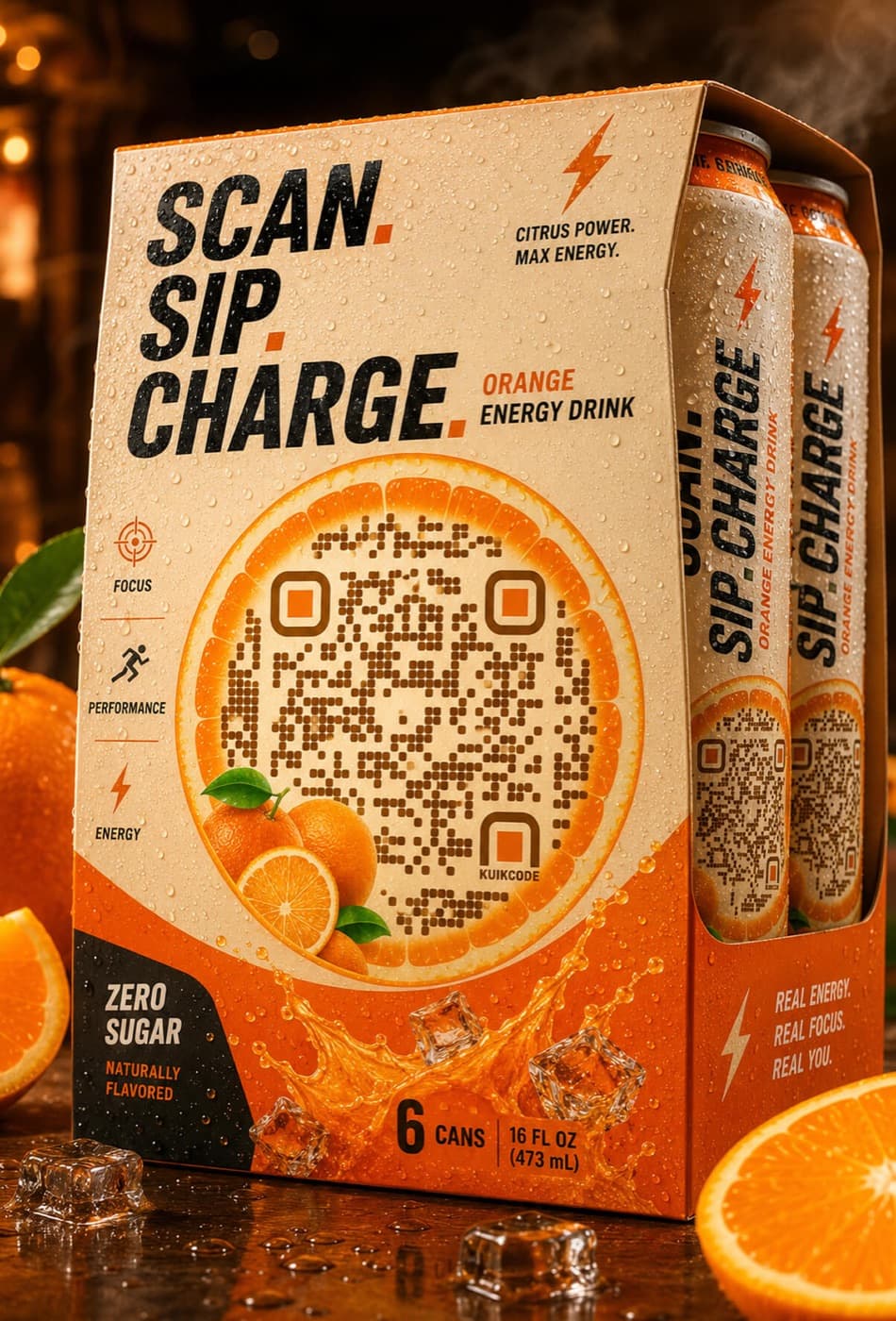

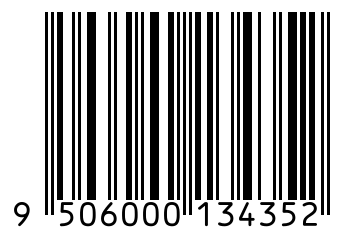
(01)09506000134352(10)LOT42(17)271231
Human-readable interpretation, printed as part of the code's frame. Element strings, never the web address.
A six-step readiness plan
- 01Audit the SKUsList every product that carries a barcode, who licenses its GTIN, and when its packaging is next reprinted. The reprint calendar decides the order, not the product list.
- 02Pick the symbol and the hostQR with a GS1 Digital Link for anything a shopper might scan, GS1 DataMatrix where only machines read it. Decide the resolver host once: an included workspace host, a branded subdomain or your own domain. Printed codes keep that host for life.
- 03Decide what phones openA product page, a KuikPage, instructions as a PDF, or smart rules that route by country and language. This can change after printing, so a placeholder page is a fine day-one answer.
- 04Print the human-readable lineThe element strings under or beside the symbol, in the size and clear zone your artwork allows. Treat it as part of the code, not as a caption.
- 05Pilot on a few linesShip the 2D code next to the existing barcode on a handful of products. Ask your retail partners to scan it at real lanes, and scan it on phones from several carriers.
- 06Measure, then widenWatch scan analytics for the pilot, confirm the register data matches, and roll the change into every packaging refresh from then on. No product gets reprinted just for the code.
Mistakes we see in the wild
- Encoding a marketing URL instead of the digital link syntax. A register cannot find a GTIN in yourbrand.com/promo.
- Printing the code on a shared resolver host. If another company can register the same GTIN under the same domain, the link is ambiguous by design.
- Dropping the human-readable line to save space. It is a requirement of the symbol, and it is the fallback when the scan fails.
- Removing the EAN or UPC before every retail partner reads 2D at every lane.
- Pointing the code at a page that will be gone in a year with no resolver in between, so the printed code dies with the campaign.
- Treating the programme as a switch-off date and rushing a reprint, then reprinting again when the details settle.
Where KuikCode fits
KuikCode encodes and resolves. You bring the GTINs your company licenses from GS1; the editor validates them, builds the digital link on a host your workspace controls, prints the human-readable line, and lets the phone destination change for as long as the product is on shelves. The resolver behind every host answers the standard linkset so retailer and partner systems can read your product links directly. Bulk batches from a CSV cover a whole catalogue in one pass, and the EAN-13 and GS1 DataMatrix companions cover the parts of the pack that still need them.
Questions, answered
01Is Sunrise 2027 a legal deadline?+
No. It is an industry programme led by GS1 with retailers and brand owners. Nobody fines a brand for shipping a linear barcode in 2028. What changes is that retailers who invested in 2D scanning will expect suppliers to keep up, and packaging refreshed today should not need another refresh to catch up.
02Do I have to remove the EAN or UPC barcode?+
Not during the transition, and GS1 recommends against it. Print the 2D code alongside the linear barcode so registers that only read 1D keep working. Remove the linear code only when your retail partners confirm every lane reads 2D.
03Which 2D symbol should I use?+
For consumer packaging that should also open a web page, a QR code carrying a GS1 Digital Link. For regulated healthcare labelling and for supply chain marks that never need a phone, GS1 DataMatrix with element strings. Both carry the same GTIN and the same Application Identifiers.
04What is the human-readable line and is it optional?+
It is the text printed next to the symbol, in element-string form such as (01)09506000134352(17)271231. GS1's General Specifications require it so a cashier or operator can key the data in when a scan fails. It shows the element strings, never the web address.
05Does a digital link need my own domain?+
The standard allows any host. What matters is that the host is yours to control, so the GTIN under it is unambiguous and the resolver behind it answers for your products alone. KuikCode gives each workspace its own host from the first code, and a branded domain is an upgrade.