The difference between a QR code and a barcode comes down to direction. A barcode stores data in one direction, as a row of bars, so it holds a short number: the product number a store's register looks up. A QR code stores data in two directions, as a grid of squares, so it holds much more: a full web address that any phone camera opens. Barcodes are built for checkout; QR codes are built for people.
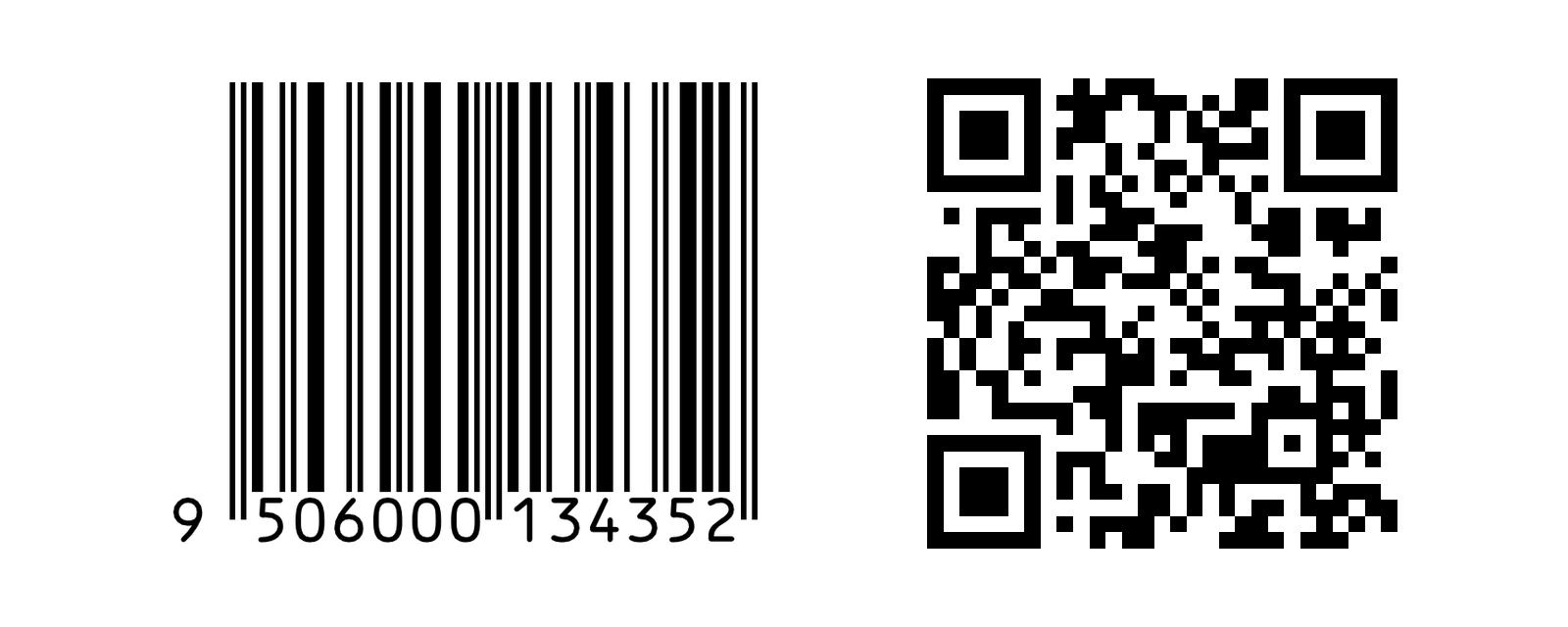
QR code vs barcode at a glance
| Barcode (UPC, EAN) | QR code | |
|---|---|---|
| Shape | A row of bars, read across | A square grid, read in both directions |
| What it holds | A short number, usually 12 or 13 digits | Up to 7,089 digits or 4,296 letters and numbers |
| Typical content | A product number the store looks up | A web address, contact card, WiFi login or text |
| Who reads it | Register and warehouse scanners | Any phone camera, plus 2D scanners |
| Damage | One torn line across the bars can stop it | Error correction rebuilds 7 to 30 percent of the code |
| Can change after printing | No, the number is the number | Yes, when the code is dynamic |
| Counts scans | Only inside the store's systems | Yes, when the code is dynamic |
What a barcode is
The barcode you know is a one dimensional code: bars and gaps of different widths that a scanner reads from one side to the other. The first product scanned with one at a store register was a pack of chewing gum, in Ohio, in 1974.
On a product, that barcode is almost always a UPC-A (12 digits, common in the US and Canada) or an EAN-13 (13 digits, used nearly everywhere else). The digits are the product's GTIN, its Global Trade Item Number, licensed from GS1. The bars don't hold a price or a name. The register reads the number and looks up the rest in the store's own database.
That's the barcode's strength and its limit. It's quick and reliable at checkout, and it means nothing to anyone without that database.
What a QR code is
A QR code is a two dimensional code: a grid of dark and light squares, read across and down. It was created in 1994 by Denso Wave, a Toyota group company, to track car parts, and the three big squares in its corners let a scanner find it from any angle. Our post on what QR code stands for tells the full story.
Two things make it different in practice:
- It holds a whole message. A web address, a contact card, a WiFi login or a few paragraphs of text fit inside the code itself, so it doesn't need anyone's database.
- Phones read it without an app. The built in camera on iPhone and Android opens a QR code's link. That is why QR codes ended up on menus, posters and packaging, and barcodes stayed at the register.
Five differences that matter when you print
1. Who scans it. If the reader is a cashier's scanner, the store needs the barcode. If the reader is a customer with a phone, you need a QR code. Phone cameras look for QR codes; reading a barcode on a phone takes an app like Google Lens, and then it shows a number or a product search, not your page.
2. How much it holds. A barcode holds the product number and nothing else. A QR code holds a link, so it can open your manual, your ingredients, a video or a reorder button.
For the full picture beyond barcodes, see the advantages and disadvantages of QR codes.
3. How it handles damage. QR codes carry error correction: depending on the level, a code still scans with roughly 7 to 30 percent of it scratched, wet or covered. It's also what lets a logo sit in the middle. A barcode has a check digit to catch a misread, but a scuff across every bar can stop it.
4. How big it prints. A standard EAN-13 is about 3.7 cm wide at full size, and stores ask for a minimum height. A QR code that holds a short link scans at about 2 cm square from a hand's distance. Longer links make denser codes that need more room; see what size a QR code should be.
5. Whether it can change. A barcode's number is fixed forever, which is right for identifying a product. A QR code can be dynamic: it holds a short link you can point somewhere else after printing, and every scan is counted. A static QR code is fixed like a barcode. See static vs dynamic QR codes.
Which one should you print?
- Products sold in stores: the retail barcode, because registers need it. Add a QR code if shoppers should reach a page: instructions, ingredients, warranty, a reorder link.
- Anything a person scans with a phone: a QR code. Menus, flyers, signs, business cards, event badges, table tents.
- Shelf labels and inventory: whatever your scanners and software read. Many warehouses use barcodes; some move to 2D codes because they fit more data in less space.
- Healthcare and small parts: often GS1 Data Matrix, another 2D code, because it fits in a very small space.
One code for both: GS1 Digital Link
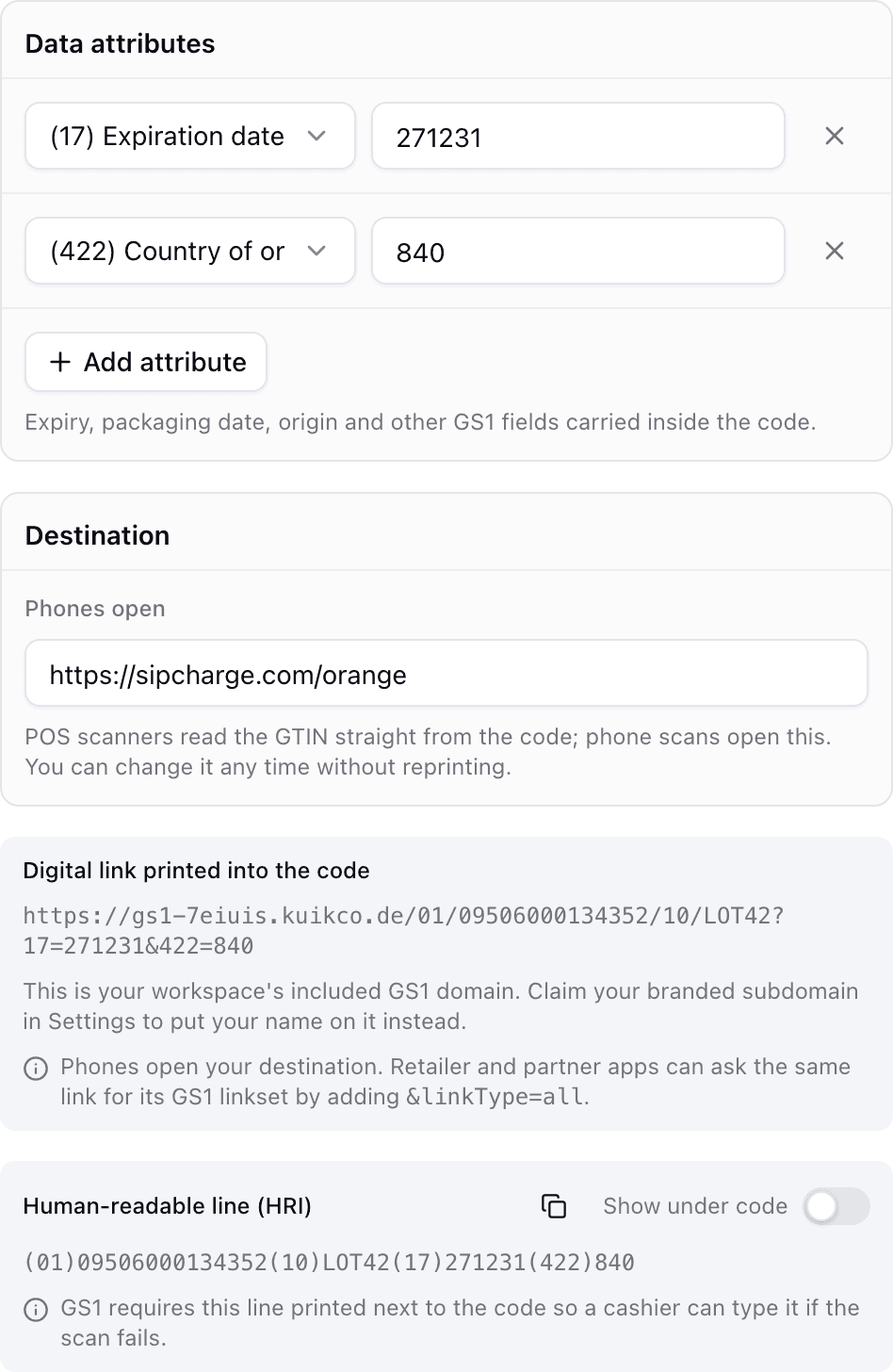
For years packaging has carried two codes that don't talk to each other: a barcode for the register and a QR code for marketing. GS1 Digital Link merges them. It's a QR code holding a web address built from the product's GTIN, like https://id.gs1.org/01/09506000134352 in the figure above, so:
- a 2D capable register reads the product number from it and rings the product up;
- a phone opens it as a link and lands on your product page.
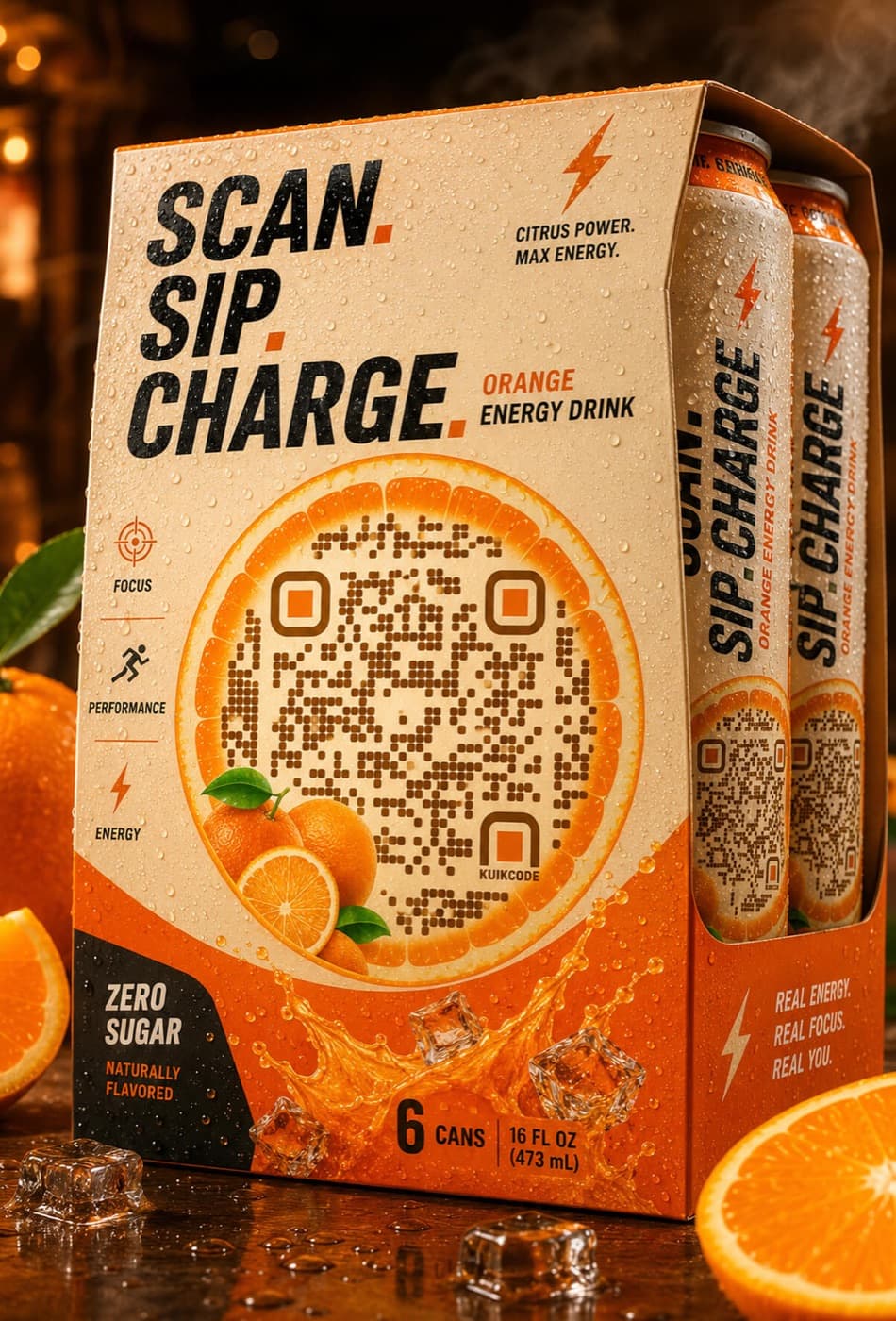
GS1 wants stores to be able to read 2D codes at checkout by the end of 2027, a goal it calls Sunrise 2027. It isn't a law and nobody is switching barcodes off, so most products will carry both for a while. Our Sunrise 2027 guide explains what it asks of brands, and QR codes on packaging walks through getting ready.
KuikCode creates GS1 Digital Link codes on the Business plan, from your GTIN plus batch, serial or expiry, with the human readable line under the code and the EAN-13 and GS1 Data Matrix versions included. The destination stays editable, and it can be a KuikPage until the product has its own site, like the ones below. See GS1 Digital Link.
What a QR code opens that a barcode can't
The bars on a box end at the register. A QR code on the same box can keep working after the sale, as long as it opens something useful. You don't need a website for that. A single mobile page does the job: a photo of the product, the details people ask about, a how-to video and a button to buy again.
In KuikCode, that page is a KuikPage, built from a template in the same workspace as the code. Four made for products:
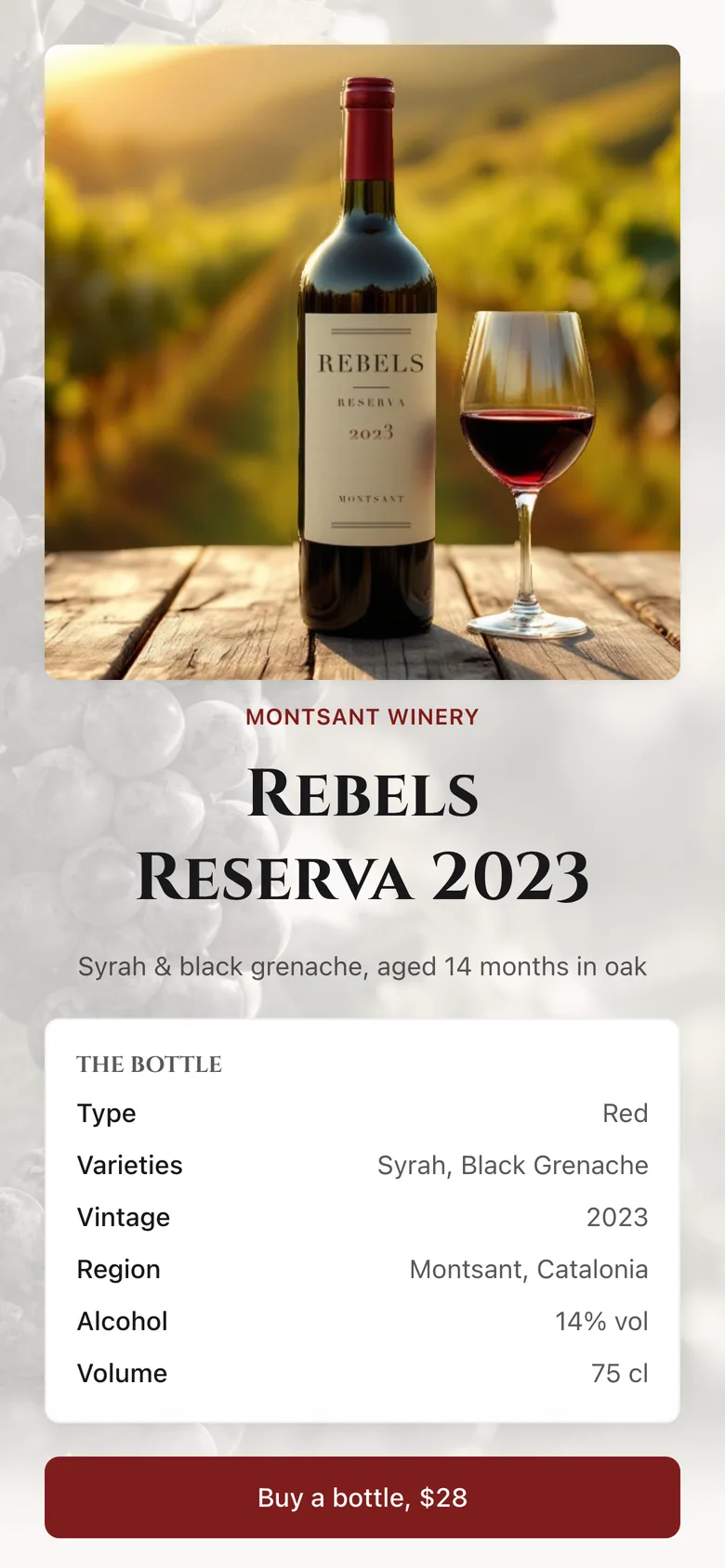
Wine
Specs, tasting notes and a Buy button.
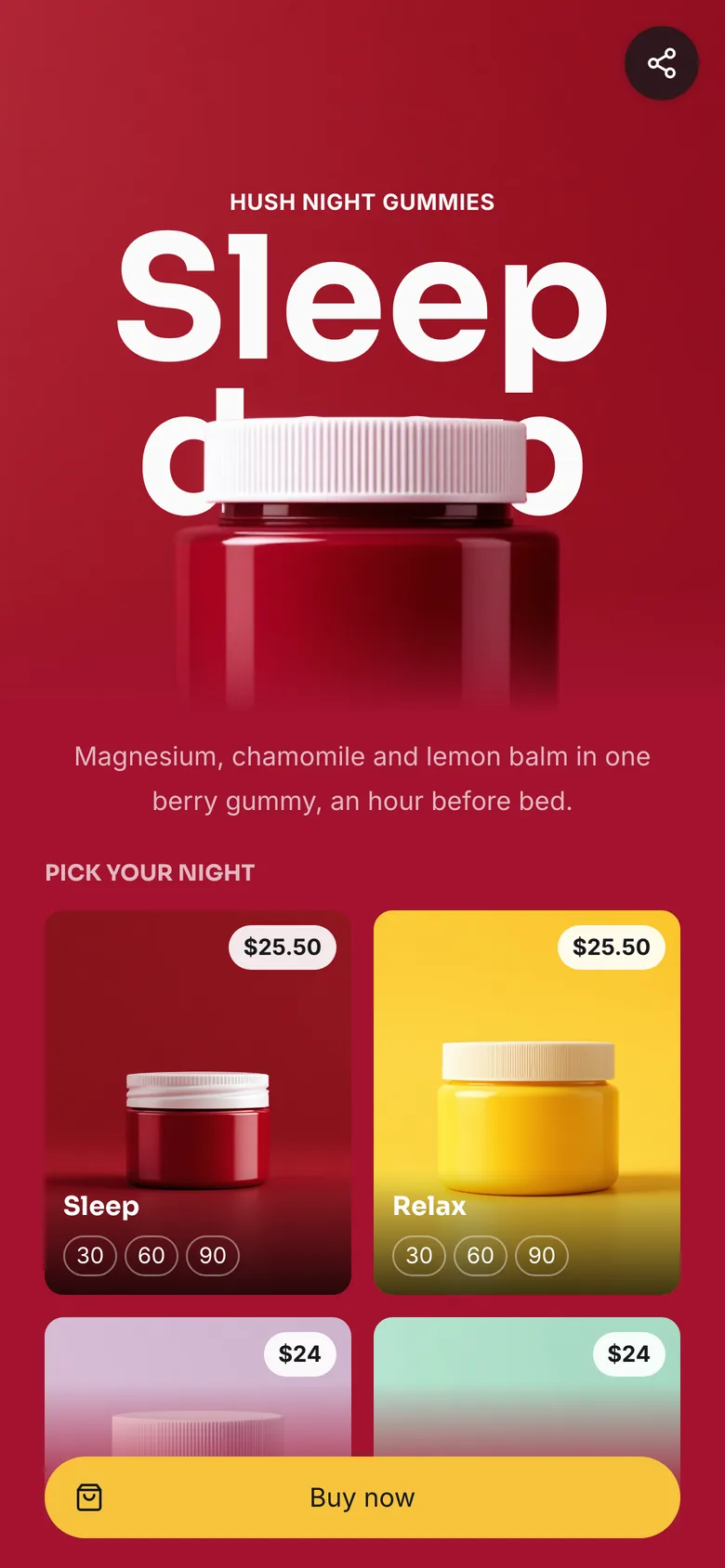
Supplements
Six flavors, each with its own sheet.
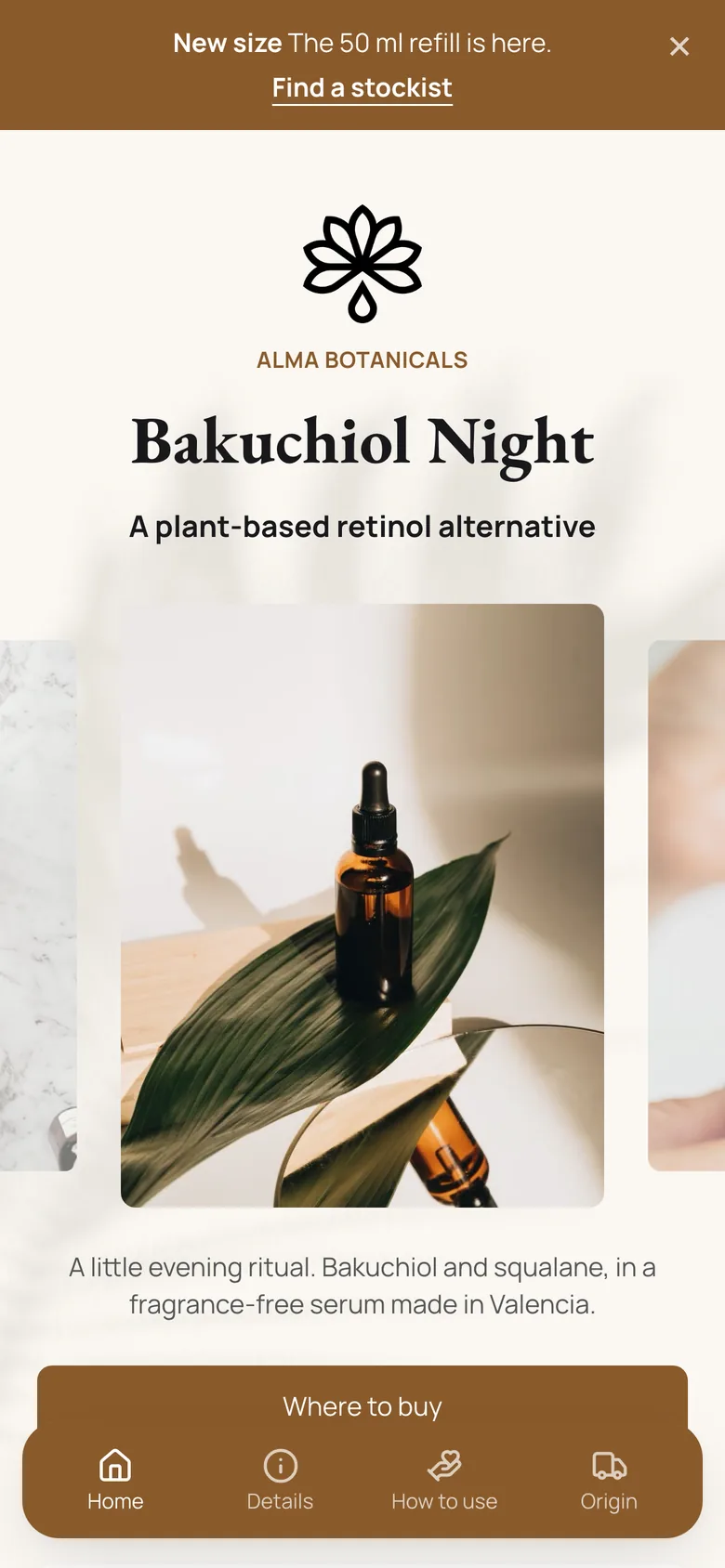
Skincare
Details, how to use it and where to buy.
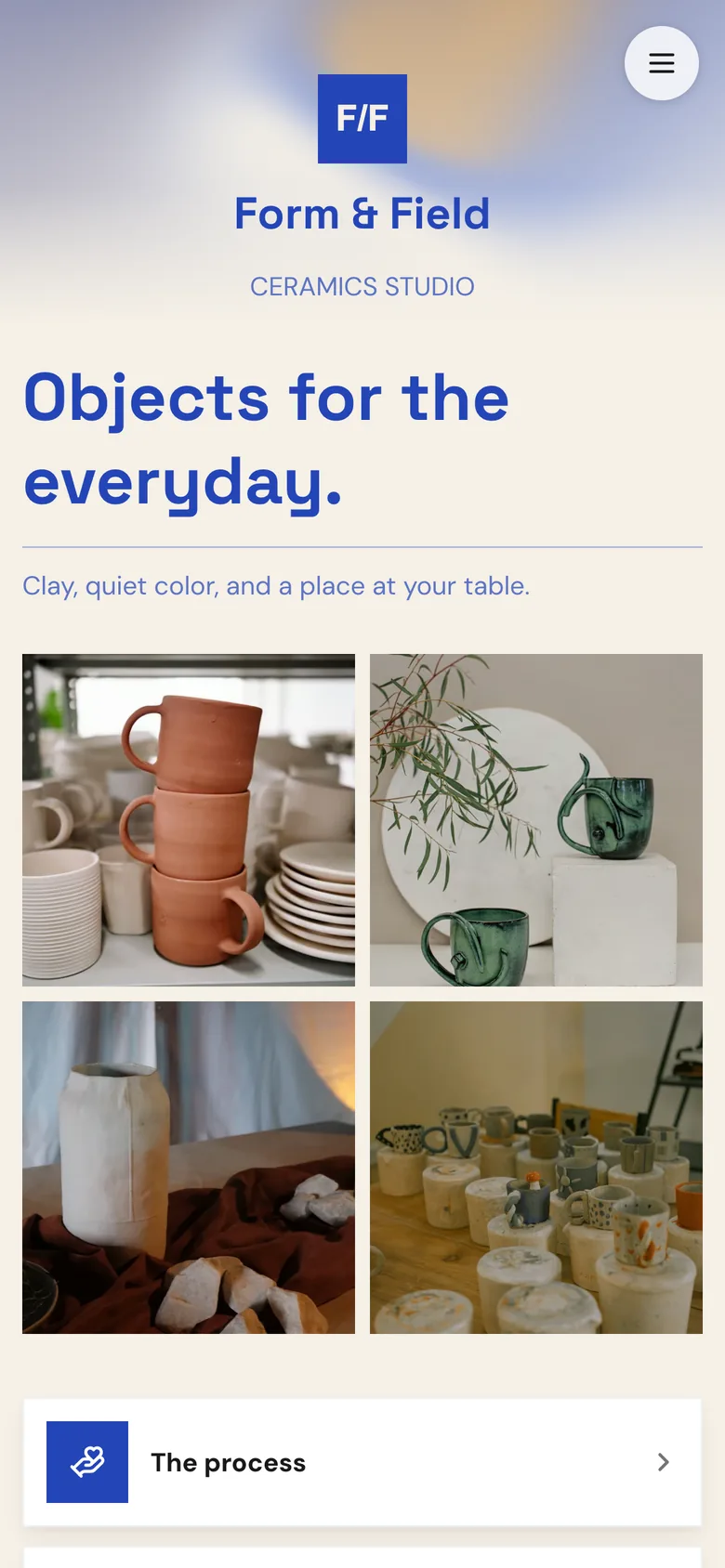
Ceramics
The collection, the process and a visit.
Because the code is dynamic, the page can change after the box is printed: a new manual, a recall notice, a seasonal recipe. The scans show which products people actually look up, by city and device.
Every plan includes a KuikPage. PRO gives you five, each with up to five pages behind a menu, so a product line gets its own page per product; Business gives you twenty five. KuikPages covers every block, and QR codes for packaging shows where the code goes on the box.
QR Code is a registered trademark of DENSO WAVE INCORPORATED.
Frequently asked questions
01What is the main difference between a QR code and a barcode?+
A barcode stores data in one direction, as bars of different widths, so it holds a short number. A QR code stores data in two directions, as a grid of squares, so it holds far more, such as a full web address. Phones open QR codes with the built in camera; barcodes are mostly read by store scanners.
02Is a QR code a type of barcode?+
Yes. A QR code is a two dimensional barcode, or matrix barcode. In everyday speech, barcode means the one dimensional kind with vertical bars, like the UPC or EAN on a product, and that's the meaning this guide uses.
03Can a phone scan a barcode?+
Usually not with the plain camera app, which looks for QR codes. Apps like Google Lens or a store's own app read barcodes, and then they show a number or search for the product. A QR code opens its link straight from the camera.
04How much data can a QR code hold compared to a barcode?+
A retail barcode (UPC-A or EAN-13) holds 12 or 13 digits. The largest QR code holds up to 7,089 digits or 4,296 letters and numbers. Real codes hold much less, because the more data, the denser the code and the bigger you have to print it.
05Will QR codes replace barcodes on products?+
Slowly. GS1, the organization behind retail barcodes, wants stores to be able to read 2D codes at the register by the end of 2027, a goal it calls Sunrise 2027. It isn't a law and nobody is switching barcodes off, so most packaging will carry both during the change.
06Which is cheaper to print, a barcode or a QR code?+
Both cost the same to print, since they're black and white marks on the same label. The cost is behind them: a retail barcode needs a GS1 licensed product number, and a QR code needs a page to open. A static QR code is free; a dynamic one, which you can edit and track, is a subscription.