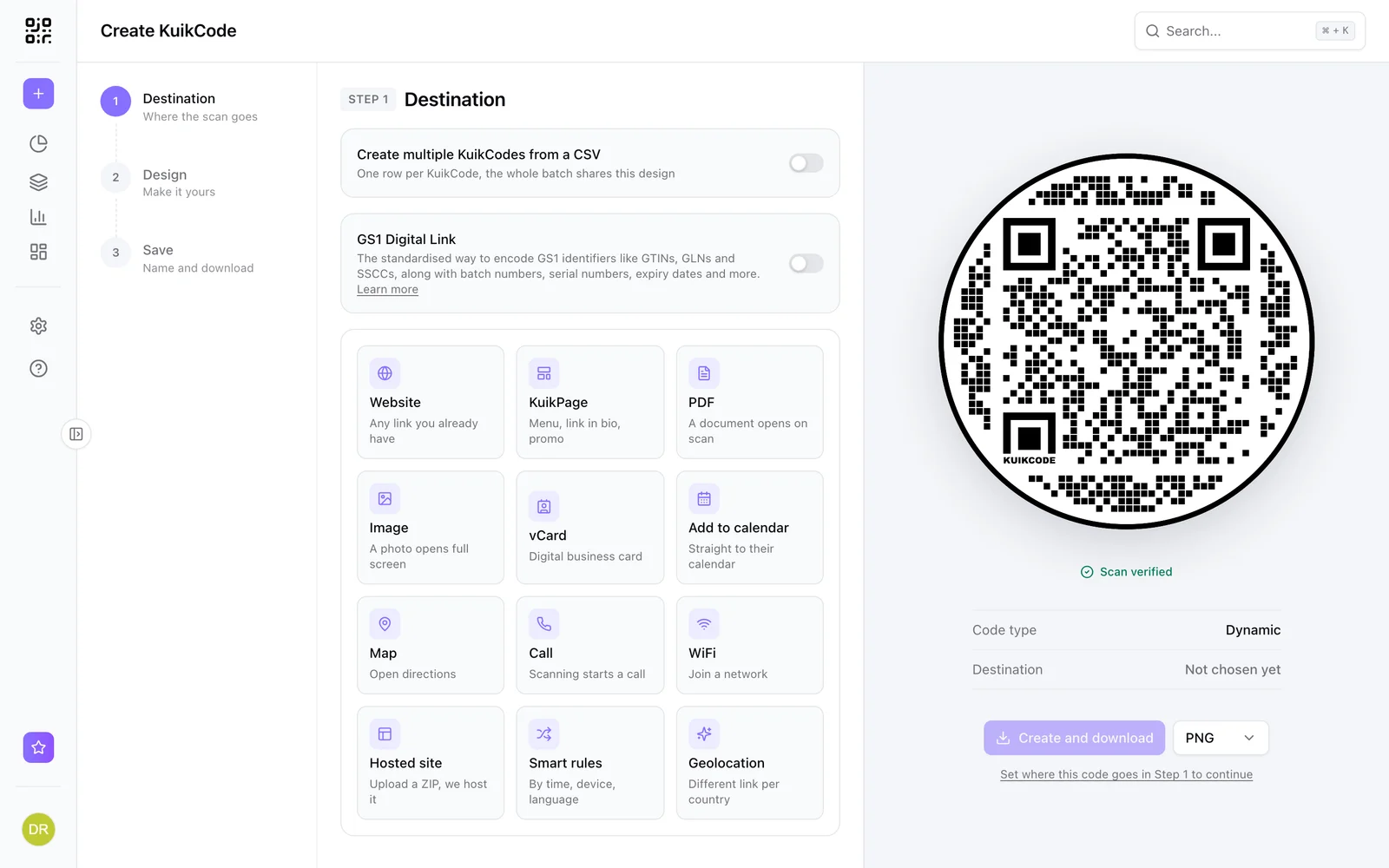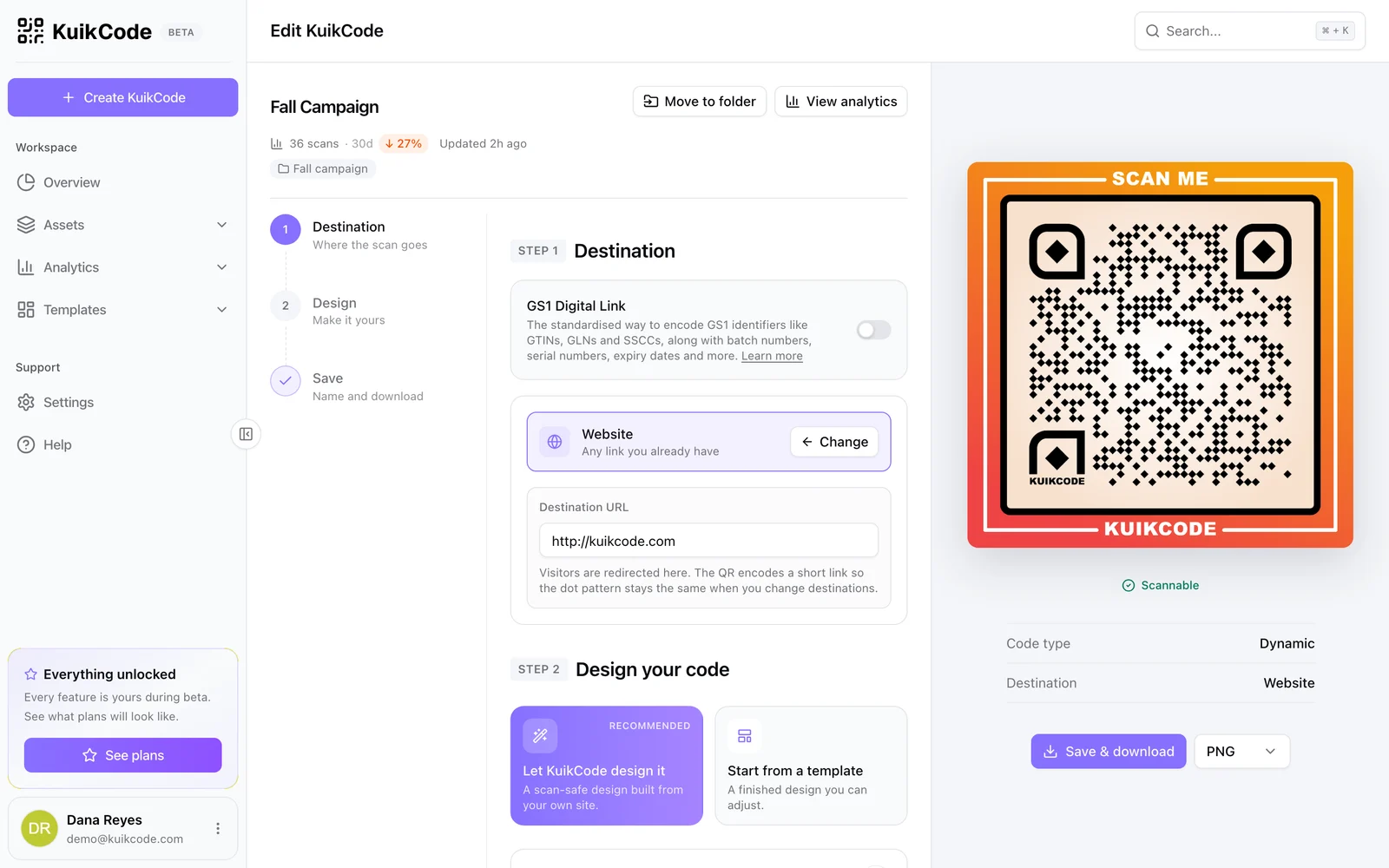
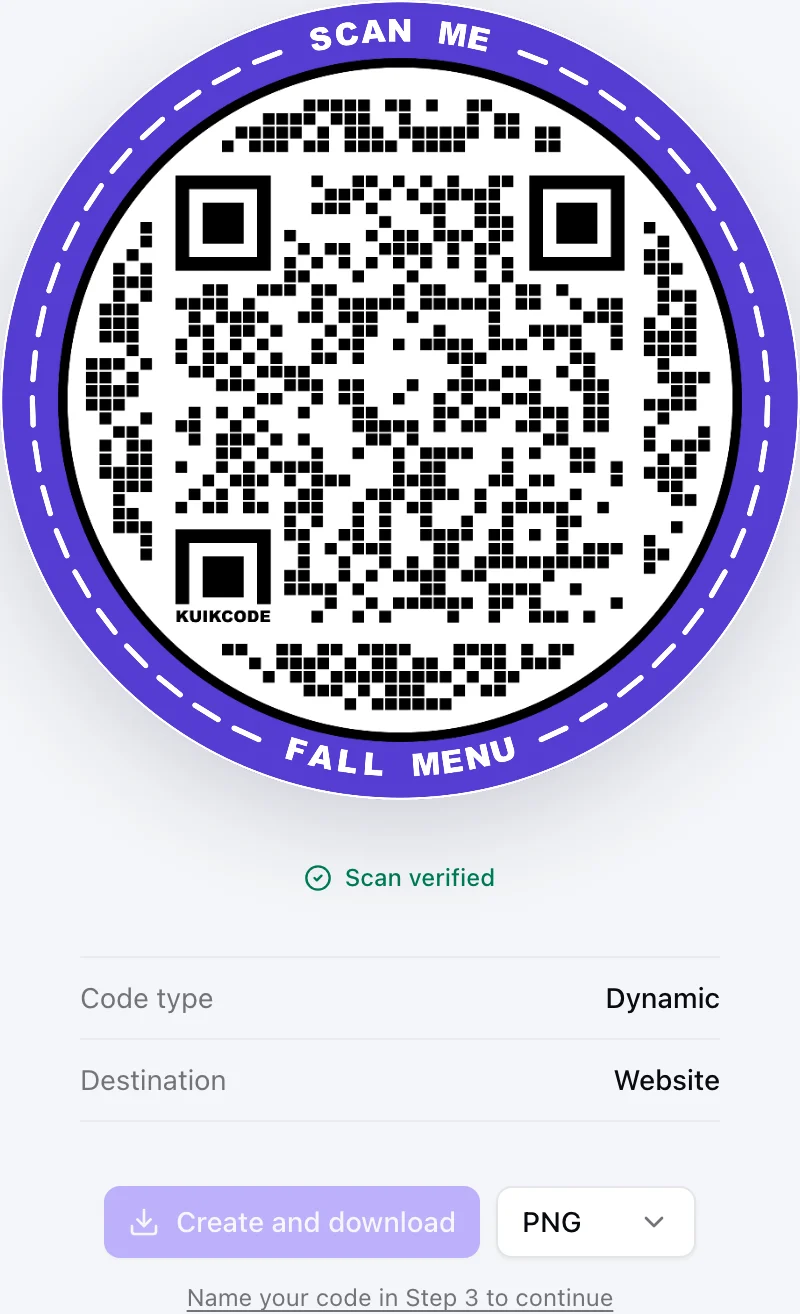
Every QR code is either static or dynamic, and you have to decide before you print. The two look the same to a phone camera, but they behave very differently once they are out in the world.
The short version: a static code is a sealed envelope, a dynamic code is a forwarding address.
The difference in one table
| Static | Dynamic | |
|---|---|---|
| What the code stores | The content itself | A short link you control |
| Edit after printing | Never | Anytime |
| Scan analytics | None | Time, location, device and more |
| Rules by device, country or time | No | Yes |
| Needs a service to keep working | No | Yes |
| Pattern complexity | Grows with content | Stays simple |
When a static code is the right choice
Choose static when the content will never change and you do not need to know who scans:
- WiFi access. Phones join the network straight from the code, so a WiFi code has to be static.
- A personal contact card you print once for yourself.
- Plain text or a serial number that is part of the product itself.
Static codes have one real strength: they do not depend on anyone. If the content is short and permanent, that independence is worth having.
When you should print a dynamic code
Choose dynamic whenever printing is the expensive part, which is almost always in business:
- Restaurant menus and price lists. Prices change, the table tents should not.
- Product packaging. Thousands of boxes can point at this year's instructions today and next year's recall notice or promotion tomorrow.
- Flyers, posters and signage. Campaigns end, the print stays up.
- Events. The schedule moves, the badge and banner codes keep working.
- Business cards for a team. When someone changes roles, you update their card behind the code instead of reprinting a box of cards.
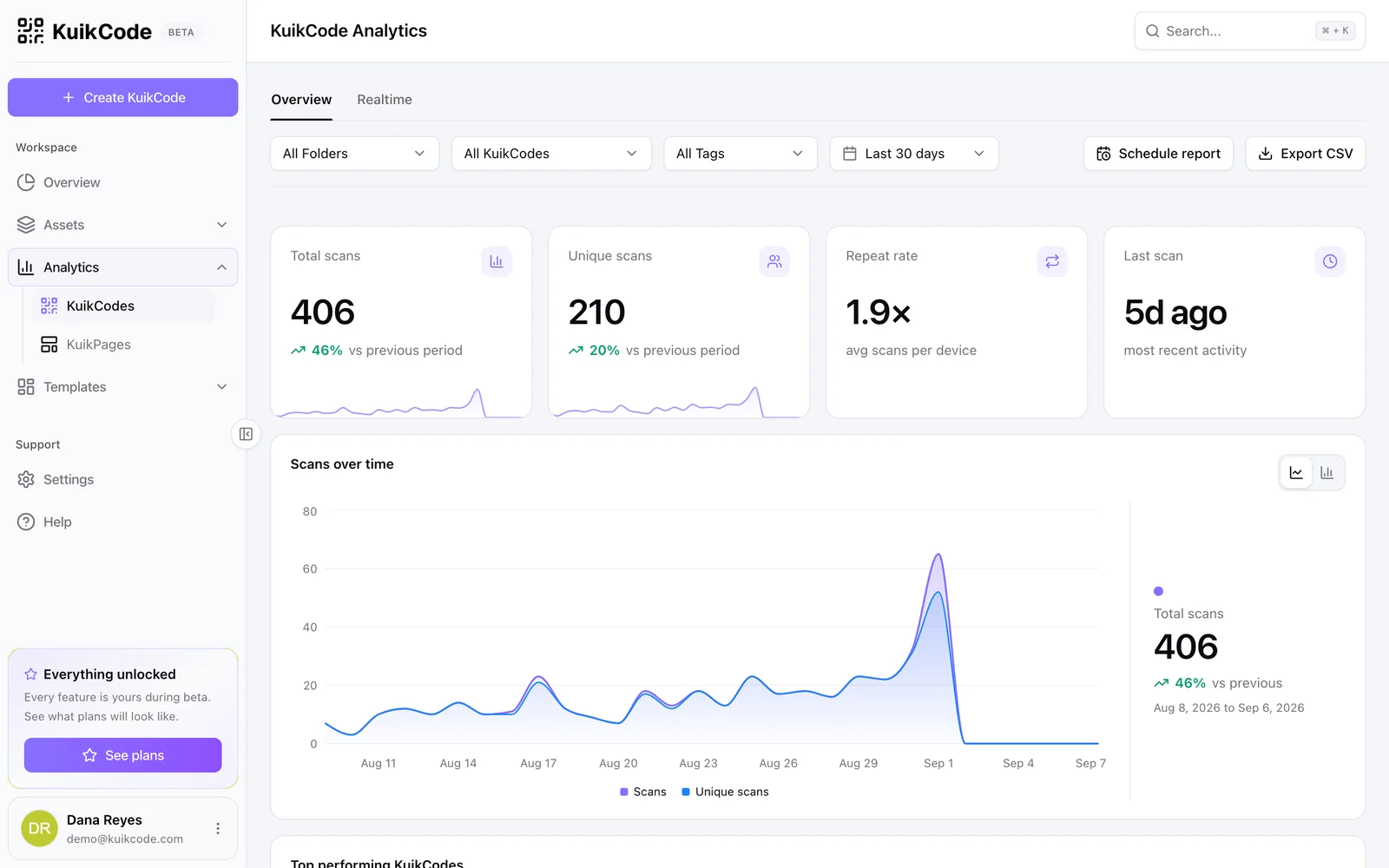
Dynamic codes also give you something static codes cannot: numbers. You see how many people scanned, when and where, which tells you which flyer, shelf or poster is actually working.
Why dynamic codes also scan better
A QR code grows denser as you put more characters into it. A static code that stores a long web address with tracking parameters ends up with tiny modules that are hard to read from a distance or on a curved package.
A dynamic code only ever stores its short link, so the pattern stays open and easy to scan, no matter how long the real destination is.
The one question to ask before you choose
Ask yourself: would I be upset if I had to reprint this?
If the answer is yes, print a dynamic code. If the content is permanent and the print run is small, static is fine.
And if you go dynamic, pick a service you trust to keep the short link running, because your printed codes depend on it. Our guide to dynamic QR codes lists the questions worth asking first.
Frequently asked questions
01Is a static QR code free forever?+
Yes. A static code needs no service to keep working, because everything the phone needs is in the pattern. The trade off is that you can never edit it or see how often it is scanned.
02Can I edit a static QR code after printing?+
No. To change what a static code does you have to create a new code and reprint it. That is the main reason businesses choose dynamic codes.
03Which is better for a restaurant menu?+
Dynamic. Menus change with seasons and prices, and a dynamic code lets you swap the PDF or page behind the same table tents and stickers.
04Which is better for a WiFi password?+
Usually static, as long as the network name and password rarely change. A WiFi code has to be static anyway, because phones join the network straight from the code.